English
 Árabe
Árabe
 Русский
 Français
 Deutsch
 Español
 Português
 日本語
日本語
 한국어
한국어
 हिंदी
हिंदी
 Prancis
 Türkçe
 Tiếng Việt
 Italiano
 ไทย
ไทย
 简体中文
简体中文

Biogas Storage and Desulfurization System for a Livestock Farm in Africa
A medium-sized livestock farm in Africa required a reliable solution for treating animal manure, producing renewable biogas, and reducing its dependence on conventional energy.
The project was designed with an integrated anaerobic digestion system, double membrane biogas holder, and biogas desulfurization system. The solution enables continuous biogas collection, stable gas storage, effective hydrogen sulfide (H₂S) removal, and cleaner biogas supply for power generation and other on-site energy applications.

Project Parameters
Project Type: Livestock Farm Biogas Project
Location: Africa
Livestock: Dairy Cattle
Cattle Population: Approximately 1,500 head
Daily Manure: Approximately 45–50 tons/day
Anaerobic Digester Capacity: 3,000 m³
Biogas Production: Approximately 1,500–1,800 m³/day
Methane Content: 55–65%
Biogas Holder Capacity: 800 m³
Gas Storage Type: Double Membrane Biogas Holder
Raw H₂S Concentration: 2,000–4,000 ppm
Target H₂S Concentration: ≤200 ppm
Desulfurization Capacity: 150 m³/h
Biogas Application: Biogas Generator / Boiler
Operating Temperature: Mesophilic
System Operation: Continuous Operation
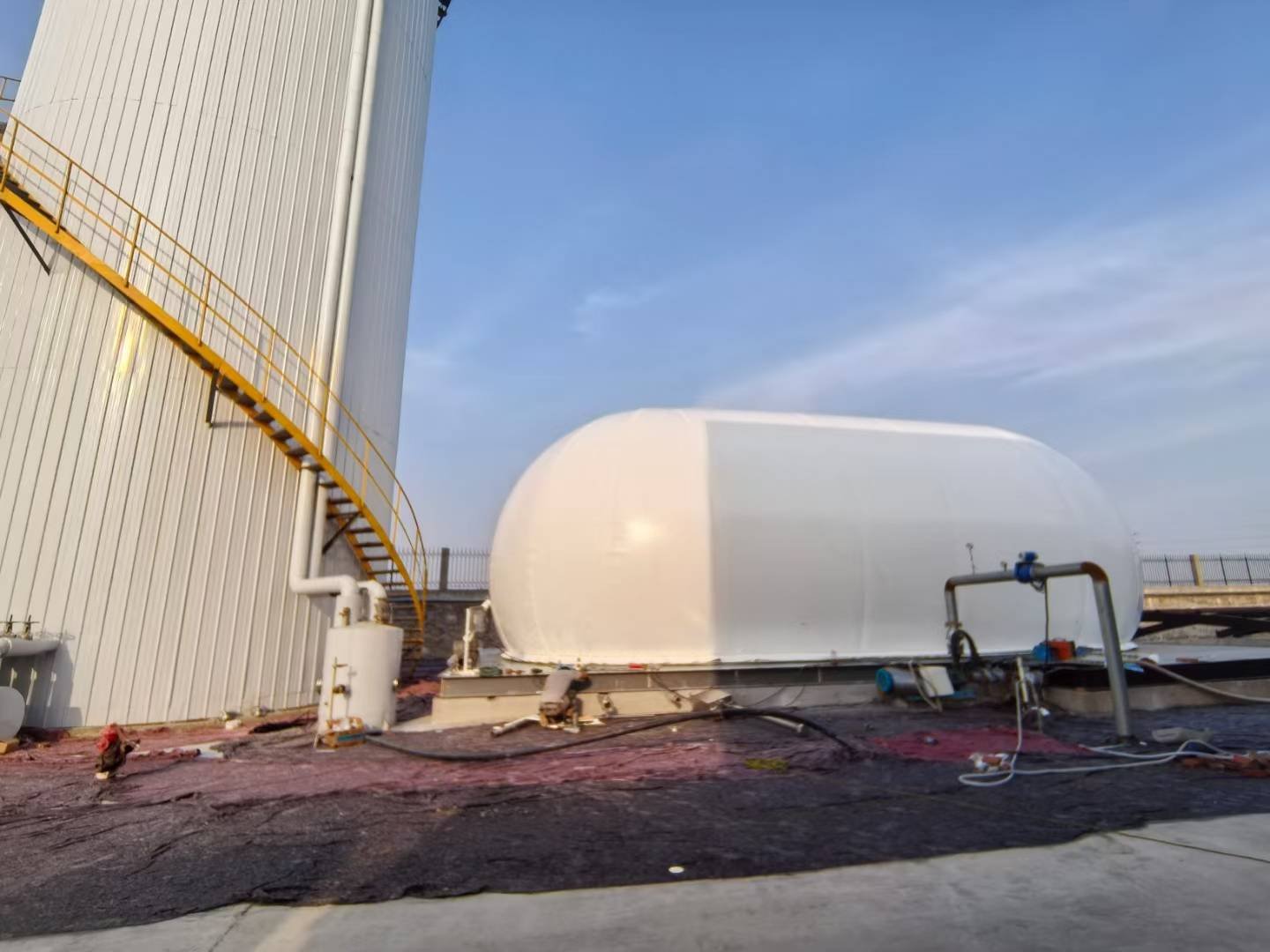
Double Membrane Biogas Holder
The double membrane biogas holder provides temporary storage between biogas production and final gas utilization.
With an effective storage capacity of approximately 800 m³, the gas holder helps balance fluctuations between biogas production and consumption while maintaining stable gas pressure for downstream equipment.
The flexible membrane structure is particularly suitable for agricultural projects where fast installation, convenient transportation, flexible capacity, and relatively low civil construction requirements are important.
The system consists of an inner gas storage membrane, outer protective membrane, air blower, pressure control components, safety devices, and related accessories.

Biogas Desulfurization System
Biogas generated from livestock manure typically contains hydrogen sulfide (H₂S), which can cause corrosion and damage to gas pipelines, boilers, engines, and other downstream equipment.
For this project, a dedicated biogas desulfurization system was installed after the biogas collection system.
The system is designed for a gas flow rate of approximately 150 m³/h, with an inlet H₂S concentration of 2,000–4,000 ppm and a target outlet concentration of less than 200 ppm.
The treatment system includes gas pretreatment, desulfurization equipment, gas-water separation, valves, monitoring instruments, and safety components.

Project Benefits
The integrated biogas system provides multiple benefits for the livestock farm:
Efficient treatment and utilization of animal manure
Continuous biogas collection and storage
Stable gas pressure for downstream equipment
Effective reduction of hydrogen sulfide
Improved protection of gas engines and pipelines
Renewable energy production on the farm
Reduced dependence on conventional energy
Improved utilization of organic waste
Production of nutrient-rich digestate for agricultural applications
By combining livestock waste treatment with renewable energy production, the project provides a practical solution for farms with a continuous supply of organic waste and on-site energy demand.

Integrated Biogas Solution
For livestock farms and agricultural projects in Africa, we provide integrated biogas equipment solutions, including:
Anaerobic Digesters · Double Membrane Biogas Holders · Biogas Desulfurization Systems · Gas-Water Separators · Biogas Flares · Biogas Collection Systems · Biogas Utilization Equipment
Each project can be customized according to livestock population, daily manure production, biogas demand, H₂S concentration, local climate conditions, and the final application of the biogas.
From organic waste to clean energy, we provide practical and reliable biogas solutions for agricultural projects across Africa.